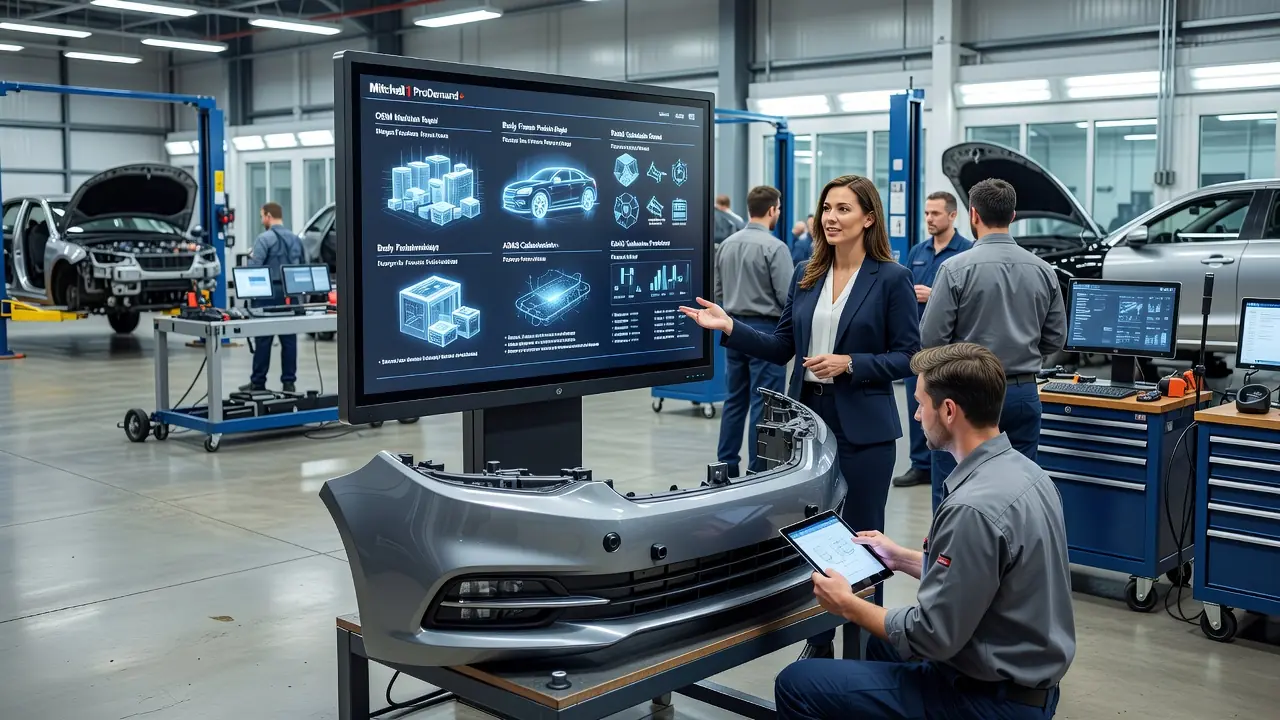
Mitchell 1 has launched ProDemand+, an add-on to its existing ProDemand platform that merges OEM mechanical repair data with body, frame and paint information in a single interface. The tool is aimed at mechanical repair shops that want to handle body-related jobs they previously had to send elsewhere.
What ProDemand+ actually adds
ProDemand already supplies mechanical diagnostics, repair procedures and maintenance specifications drawn from OEM sources. ProDemand+ extends that database to cover body and frame repair procedures, materials and refinishing specifications, and paint-related guidance-information that has traditionally lived in separate collision-repair systems rather than alongside standard mechanical data.
Cami Hermann, marketing director at Mitchell 1, said the update reflects how modern vehicles blur the line between mechanical and body systems. "ProDemand+ gives mechanical shops access to expanded OEM repair information to confidently evaluate and take on certain body-related repairs they may have previously outsourced," she said, adding that the goal is to help shops "keep more work in-house, increase revenue and better serve their customers."
Why ADAS calibration is central to the pitch
A major driver behind the integration is the growing prevalence of advanced driver assistance systems. Replacing bumpers, mirrors or body-mounted sensors frequently triggers a need for ADAS calibration, which depends on precise OEM procedures for sensor positioning. By consolidating this information, Mitchell 1 says technicians can identify calibration requirements and related system dependencies before starting a repair, rather than discovering mid-job that a vehicle needs specialized recalibration work.
Practical limits for shop owners
Mitchell 1 is careful to frame ProDemand+ as an evaluation tool rather than a replacement for collision specialists. Major structural damage and complex collision repairs are still expected to go to qualified body shops. The practical value, according to the company, lies in helping general repair shops make better-informed decisions about which body-adjacent jobs fall within their existing equipment and training-and which do not. That upfront clarity, Mitchell 1 argues, can reduce unnecessary referrals and shorten the overall repair timeline for customers, though actual gains will depend on each shop's existing capabilities and how it adopts the new information.