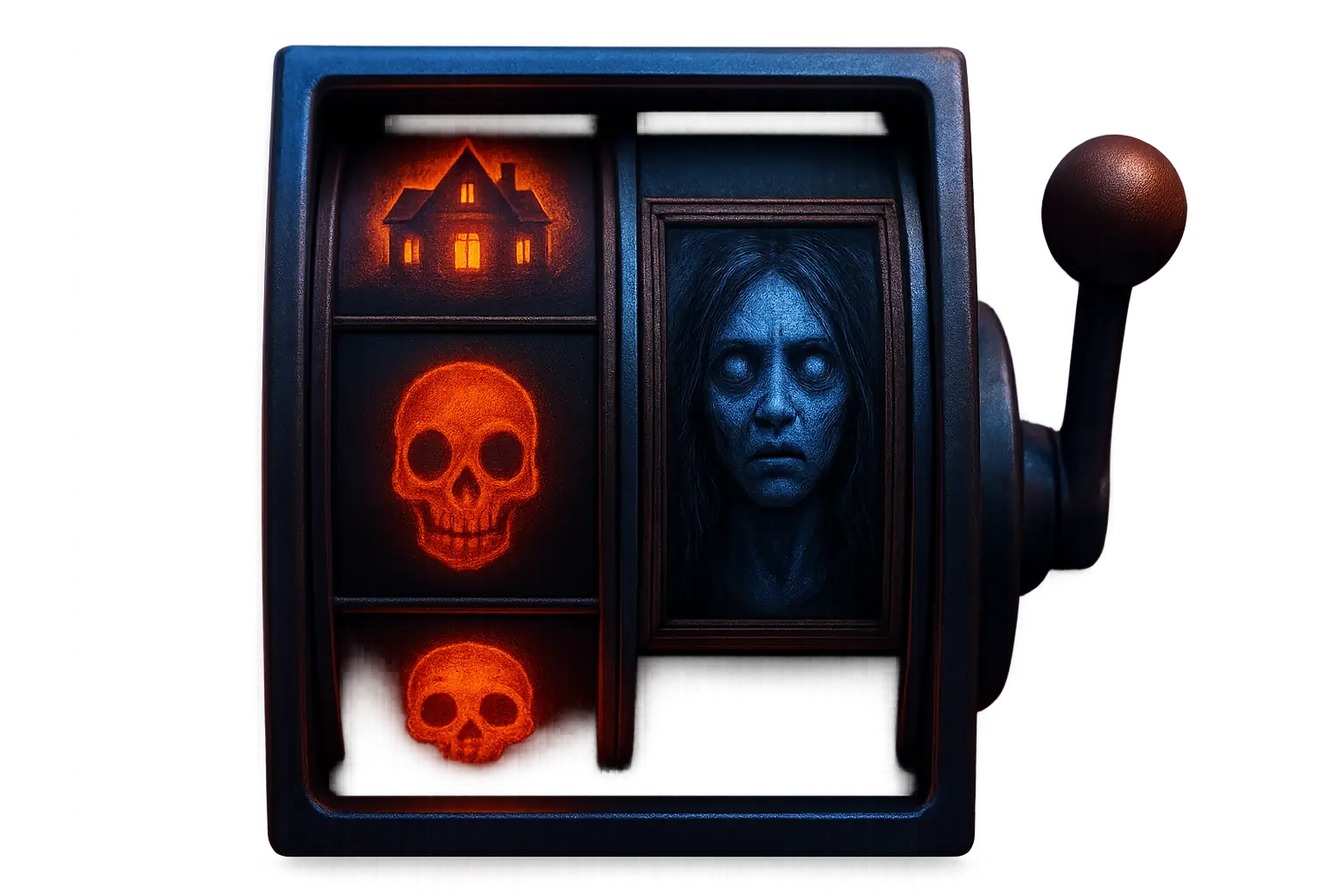
A single spin on a Megaways grid can produce over 200,000 possible ways to win, and that mechanical volatility is precisely what turns a horror concept into something more than decoration. Nightmare Family takes the reel-cascading, ways-to-win engine popularized across the industry and wraps it around a haunted household theme - think creaking staircases, distorted family portraits, and symbols that feel like they're watching you back. The pairing isn't accidental. Horror and high volatility share the same psychological currency: tension, delayed payoff, and the promise that something big is lurking just beneath the surface.
This piece breaks down what makes Nightmare Family worth a serious look, from its mechanical backbone to its risk profile and realistic win expectations. Readers already familiar with megaways slot game mechanics will find the comparisons useful; newcomers will get a grounded explanation of why this title sits firmly in the high volatility slots category rather than the casual, low-risk end of the spectrum. Either way, the goal here is clarity - what the game actually offers, what it demands from a player's bankroll, and where it fits among other horror themed slots competing for attention right now.
What Is Nightmare Family Megaways Slot?
Core Concept and Theme
Nightmare Family builds its identity around a cursed household - a family trapped in some kind of looping domestic horror, rendered through dim lighting, unsettling character portraits, and sound design that leans into dread rather than jump-scare cliché. The visual language draws from classic haunted-house storytelling: flickering lamps, cracked family photographs, and symbols that shift subtly between spins. Unlike horror slots that rely purely on gore, this title leans into psychological unease, which tends to age better across repeated play sessions.
Why the Horror Theme Works for Slot Design
Horror as a theme does something practical for slot mechanics - it justifies unpredictability. A game where symbols "transform" or reels "collapse" feels narratively coherent when the backdrop is a haunted family rather than, say, a fruit stand. Among horror themed slots, the strongest titles use atmosphere to reinforce volatility rather than just decorate it, and Nightmare Family follows that pattern by tying its cascading wins and multiplier escalation directly to the sense of something building toward a climax.
Where It Sits Among Modern Slot Releases
Compared to traditional fixed-payline games, Nightmare Family belongs to a newer generation of titles built on dynamic reel systems. It shares DNA with other megaways slot game releases that prioritize variable ways-to-win over fixed structures, but distinguishes itself through pacing - the horror narrative gives players a reason to stay engaged through dry spells, something purely mechanical games often lack.
- Haunted-household narrative with recurring family characters
- Dynamic reel structure instead of fixed paylines
- Atmosphere-driven pacing between bonus triggers
Understanding the Megaways Mechanic
How Megaways Generates Thousands of Ways to Win
The Megaways engine randomizes the number of symbols appearing on each reel for every spin, which multiplies out into a massive number of possible winning combinations - commonly ranging from the tens of thousands up into the low hundreds of thousands, depending on the maximum reel height. This isn't a cosmetic feature. It directly shapes win frequency, payout distribution, and how the game feels to play compared to a standard 20-line slot.
Cascading Reels and Win Multipliers
After a winning combination lands, the involved symbols typically disappear, allowing new ones to drop in and potentially create additional wins in a single spin. Nightmare Family layers a multiplier on top of each cascade, so a lucky chain reaction can escalate quickly - this is the mechanical heartbeat behind most of the game's bigger hits, and it's a hallmark of how modern megaways slot game titles generate excitement without needing constant bonus triggers.
Comparing Megaways to Traditional Paylines
Fixed payline slots offer predictability - the same number of ways to win every spin. Megaways trades that predictability for variance. One spin might offer a modest number of win ways; the next could offer several hundred thousand. This fluctuation is a major reason megaways titles tend to cluster at the higher end of the volatility scale.
Volatility Explained: Why This Game Hits Different
What High Volatility Actually Means for Players
Volatility describes how a slot distributes its payouts over time. Low volatility games pay small wins frequently; high volatility slots do the opposite - long stretches without significant returns, punctuated by rare but substantial payouts. Nightmare Family sits confidently in this second category, meaning players should expect dry spells as a normal part of the experience, not an anomaly.
How Volatility Shapes Bankroll Strategy
Playing a high-volatility title without adjusting bankroll expectations is the fastest way to burn through a budget in frustration. Smaller, more numerous bets stretched across a longer session give the mathematics room to work - volatility needs sample size to express itself in the player's favor. Chasing losses with bigger bets only accelerates the downside without improving the odds of a big hit.
Session Length and Realistic Expectations
Because high-volatility slots reward patience more than frequency, shorter sessions often end without any meaningful payout at all - that's expected, not a flaw. Players drawn to this category generally accept a lower win rate in exchange for the possibility of a disproportionately large return.
- Frequent small wins: low volatility behavior
- Rare large wins: high volatility behavior - Nightmare Family's category
- Bankroll should be sized for extended dry spells, not quick recovery
Bonus Features and Gameplay Mechanics
Free Spins and Retrigger Potential
Free spin rounds in Nightmare Family typically carry enhanced multiplier conditions compared to the base game, making them the primary vehicle for serious payouts. Retriggers extend the round and compound the multiplier escalation, which is where the game's horror narrative and mechanical payoff genuinely intersect - the longer the "nightmare" continues, the higher the stakes climb.
Special Symbols: Wilds, Scatters, and Multipliers
Wild symbols substitute for standard icons to complete combinations, while scatters trigger the bonus round regardless of their position on the reels. Multiplier symbols, often tied directly to the family members depicted in the theme, increase in value as cascades continue, rewarding sustained winning streaks rather than isolated hits.
Bonus Buy Options (If Applicable)
Many modern horror themed slots, including titles built on this mechanical framework, offer a bonus buy feature allowing players to pay a premium upfront to enter the free spins round directly. This removes the wait but doesn't change the underlying volatility - it simply shifts when the risk is taken on.
Max Win Potential: What Players Can Realistically Expect
Understanding Max Win Multipliers
Slot developers typically cap the maximum possible win at a multiple of the initial stake - common figures across the max win slots category range from several hundred times the bet up into the thousands. Nightmare Family's design, with its compounding cascade multipliers, positions it among titles capable of reaching the higher end of that spectrum, though hitting the actual ceiling requires an extended, near-perfect run through the bonus round.
RTP and How It Relates to Big Win Chances
Return to Player percentage reflects the theoretical long-term payback of a game, not a guarantee for any individual session. A high RTP doesn't soften volatility - it simply means that, averaged across an enormous number of spins, the game returns a larger share of wagered money. The max win ceiling and the RTP are related but distinct: one describes the best-case outcome, the other describes the long-run average.
Realistic Odds of Hitting the Maximum Payout
Reaching the advertised maximum on any max win slots title is a statistically rare event - these outcomes are built to occur infrequently, often requiring a near-ideal sequence of cascades and multiplier symbols stacking within a single free spins round. Players should treat the max win figure as an aspirational ceiling, not an expected outcome.
How Nightmare Family Compares to Other Horror Slots
Thematic Differences from Competing Titles
Where some horror themed slots lean into gore or slasher-film imagery, Nightmare Family favors psychological dread - distorted domestic scenes rather than explicit violence. This positions it closer to atmospheric horror cinema than shock-value horror, which broadens its appeal to players who want tension without graphic content.
Mechanical Differences: Megaways vs. Fixed Reel Horror Slots
Several well-known horror slots still rely on fixed paylines and simpler bonus structures. Nightmare Family's Megaways foundation gives it a mechanically denser experience, with more variables influencing each spin's outcome - which, in turn, raises both the ceiling and the variance compared to its fixed-reel counterparts.
Which Players Should Choose This Game Over Alternatives
Players who enjoy narrative-driven horror themed slots but want the added mechanical depth of a megaways slot game will find Nightmare Family a natural fit. Those who prefer steadier, more frequent payouts might be better served by a lower-volatility alternative within the same theme category.
- Choose Nightmare Family for: deep volatility, cascading multipliers, atmospheric horror
- Choose alternatives for: frequent small wins, simpler fixed-payline structure, lower bankroll risk
Frequently Asked Questions
Is Nightmare Family suitable for players with a small bankroll?
It can be played with small bets, but the high-volatility structure means a small bankroll will likely experience long dry stretches before any significant win. Players with limited funds should lower their bet size rather than reduce their intended number of spins, since volatility needs sample size to play out favorably.
How does the Megaways mechanic affect my actual odds of winning?
More ways to win per spin generally increases the frequency of small-to-medium hits compared to a fixed payline game with the same RTP, but it doesn't guarantee better overall returns. The underlying RTP and volatility rating still determine the long-term outcome far more than the raw number of win ways.
What's the difference between RTP and max win potential?
RTP is a long-run average describing how much of all wagered money theoretically returns to players over time. Max win potential is the single largest possible payout multiplier the game can produce, an outcome that occurs far less often than the RTP figure might suggest.
Does buying the bonus round improve my chances of a big win?
Buying into the free spins round guarantees access to the feature but doesn't change the odds of landing a large multiplier once inside it. It simply removes the base-game wait and shifts the cost structure, not the underlying probability of a big result.
Why do horror themed slots often use high volatility mechanics?
Horror narratives thrive on tension and delayed payoff, which mirrors exactly how high volatility slots are structured - long quiet stretches followed by sudden, intense payouts. The thematic and mechanical pacing reinforce each other, making horror a natural fit for this risk category.
Is Nightmare Family a good choice for players new to Megaways games?
It's playable for newcomers, but its high volatility means new players should start with smaller bets to understand the pacing before increasing stakes. Trying a lower-volatility megaways slot game first can help build intuition before tackling a title built around bigger swings.